
AURELUNE Guide
How to Choose a Crystal Focal Stone for a Handmade Wire-Wrapped Pendant
The most memorable handmade pendants begin with a clear relationship between stone and setting. Choose the focal crystal as both a material and a visual story: its silhouette, color, surface, and traditional symbolism should all have room to be seen.
Editor's Note
A practical, design-led guide to choosing the right crystal shape, color, symbolism, and visual weight for a handmade wire-wrapped pendant.
01 / Begin with the stone
A beautiful crystal is not automatically the right pendant stone
When you choose a focal stone, it is tempting to start with the most dramatic color or the most unusual shape. A better starting point is to ask what the stone needs from the setting. Does it want an open frame, a protective rim, a small crown, or a little negative space around its edges?
The answer changes the character of the finished piece. A rounded cabochon can feel calm and centered. A pointed or irregular stone can bring movement. A translucent stone may need a simpler wire silhouette so light and color remain visible. This is why the stone should be treated as the first design decision, not as an afterthought added to a generic pendant frame.
02 / Read the silhouette
Let shape decide the rhythm of the wire
Wire wrapping is a conversation between line and form. Round stones invite circles, halos, and repeated curves. Long stones can be framed with vertical lines or a narrow cage. Freeform pieces often look strongest when the wire acknowledges one or two natural edges instead of trying to make the stone perfectly symmetrical.
Crystal spheres are especially useful as styling references because they make you notice volume, balance, and the importance of a stable base. For a wearable pendant, a flatter stone or carefully selected freeform usually gives the setting more predictable contact points. If you love the atmosphere of a sphere, echo it through rounded wire loops, a circular bail, or a matching sphere displayed nearby. Explore AURELUNE's crystal sphere display guide: https://www.aurelunegems.com/guides/how-to-display-a-crystal-sphere
03 / Build a color story
Choose the color you will actually wear
The right crystal color is not only the color you admire in a photograph. It is the color that can live with your wardrobe, skin tone, favorite metal, and everyday lighting. Warm golds, amber-like browns, and honeyed yellows can make a pendant feel sunlit. Violet, smoky, and clear stones can create a quieter, more nocturnal mood. Soft pinks and watery blues often read as lighter and more delicate.
Try placing the stone beside three pieces you already wear. Notice whether it repeats a color, creates a useful contrast, or introduces a new accent without making the rest of the look feel disconnected. AURELUNE's guide to building a crystal color story offers a practical way to think about hue, value, and texture before you commit to a stack: https://www.aurelunegems.com/guides/building-crystal-color-story
04 / Use meaning as a design brief
Let symbolism sharpen the choice, not dictate it
Gemstone meanings are most helpful when they give your design a point of view. Clear quartz is often used in modern crystal culture as a symbol of clarity. Amethyst is traditionally associated with calm and contemplation. Citrine is commonly linked with warmth, optimism, and abundance. These are cultural meanings and personal associations, not medical promises.
You might choose a stone because its traditional symbolism matches a season of life, then refine the choice by asking whether you like its shape and whether you will reach for it often. That combination creates a more honest keepsake than choosing a stone only because a trend says it should represent a certain quality.
05 / Design for movement
A pendant has to work when the wearer moves
Before the wire is finished, imagine the pendant at the collarbone, over a knit top, beneath an open shirt, or beside a bracelet stack. A large focal stone can be beautiful, but it may need a simpler chain and more breathing room. A smaller stone can gain presence from a distinctive bail or a deliberate halo of wire.
Think about where the bottom edge sits, how the pendant turns, and whether the wire could catch on fabric. These are not compromises; they are part of the craft. The most wearable statement is usually the one that still feels comfortable after the first hour, not just the one that looks striking in a still photograph. For bracelet pairings, keep the rest of the look considered and let the pendant remain the visual anchor. See AURELUNE's pendant layering guide: https://www.aurelunegems.com/guides/how-to-layer-wire-wrapped-crystal-pendants
Choose the stone that gives your hands a clear question to answer: how can the wire reveal what is already beautiful here?
A simple focal-stone checklist
- 1Choose the mood first: quiet, luminous, earthy, dramatic, or playful.
- 2Compare two or three shapes at the same viewing distance and notice which silhouette still feels interesting without extra decoration.
- 3Place the stone beside your preferred chain, metal tone, and one everyday outfit.
- 4Check the likely contact points where wire can support the stone without covering its best face.
- 5Use traditional gemstone symbolism as a personal note, and write one sentence about what the piece is meant to remind you of.
- 6Only then decide on the final wire language, bail shape, and styling companions.
06 / See the idea finished
A finished piece can be a reference, not a rule
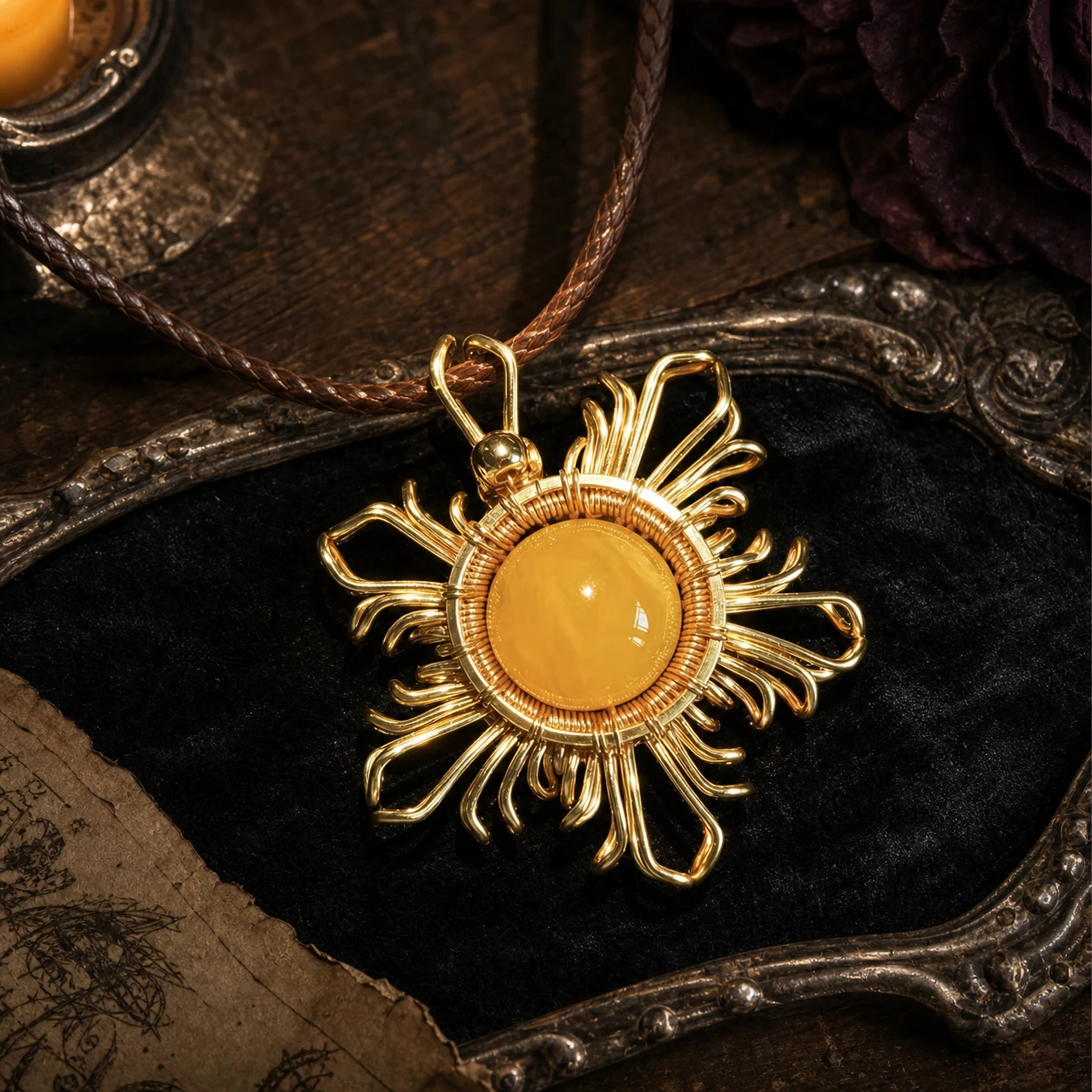
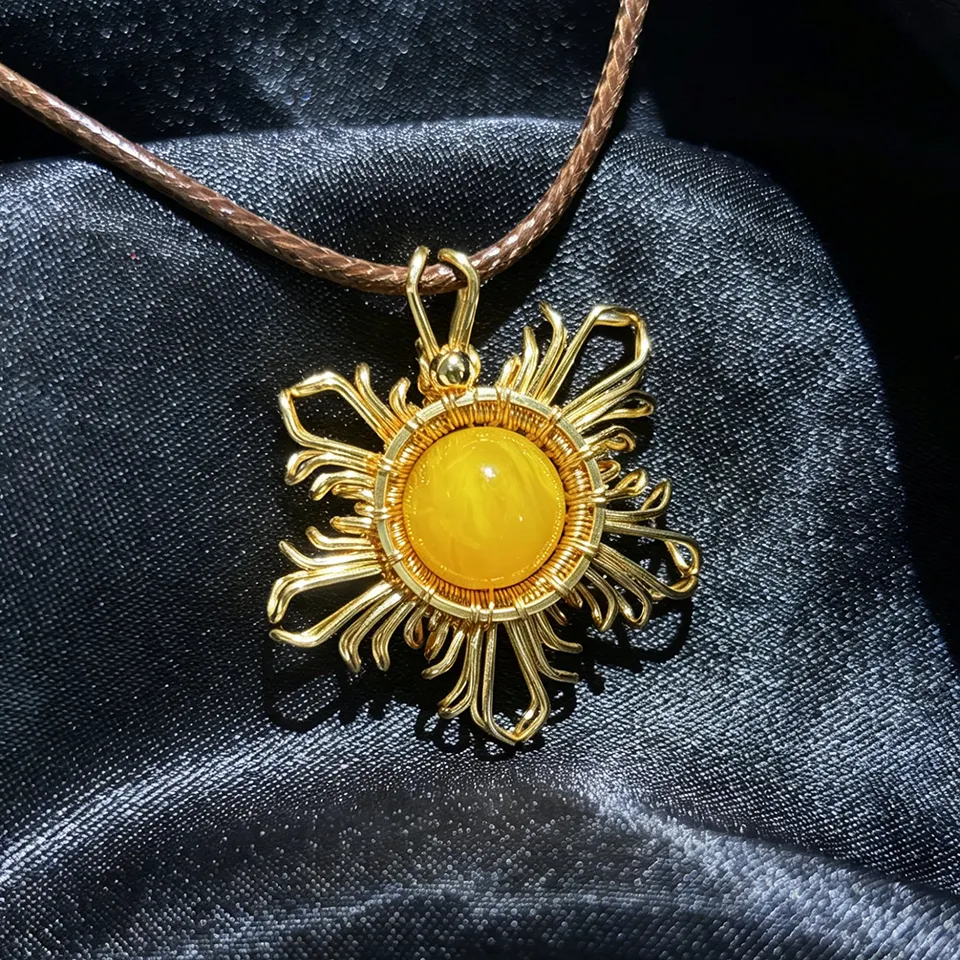
AURELUNE's Golden Sunflower crystal wire-wrapped pendant shows how a warm focal stone and a recognizable wire silhouette can carry a whole look: https://www.aurelunegems.com/products/golden-sunflower-crystal-wire-wrapped-pendant
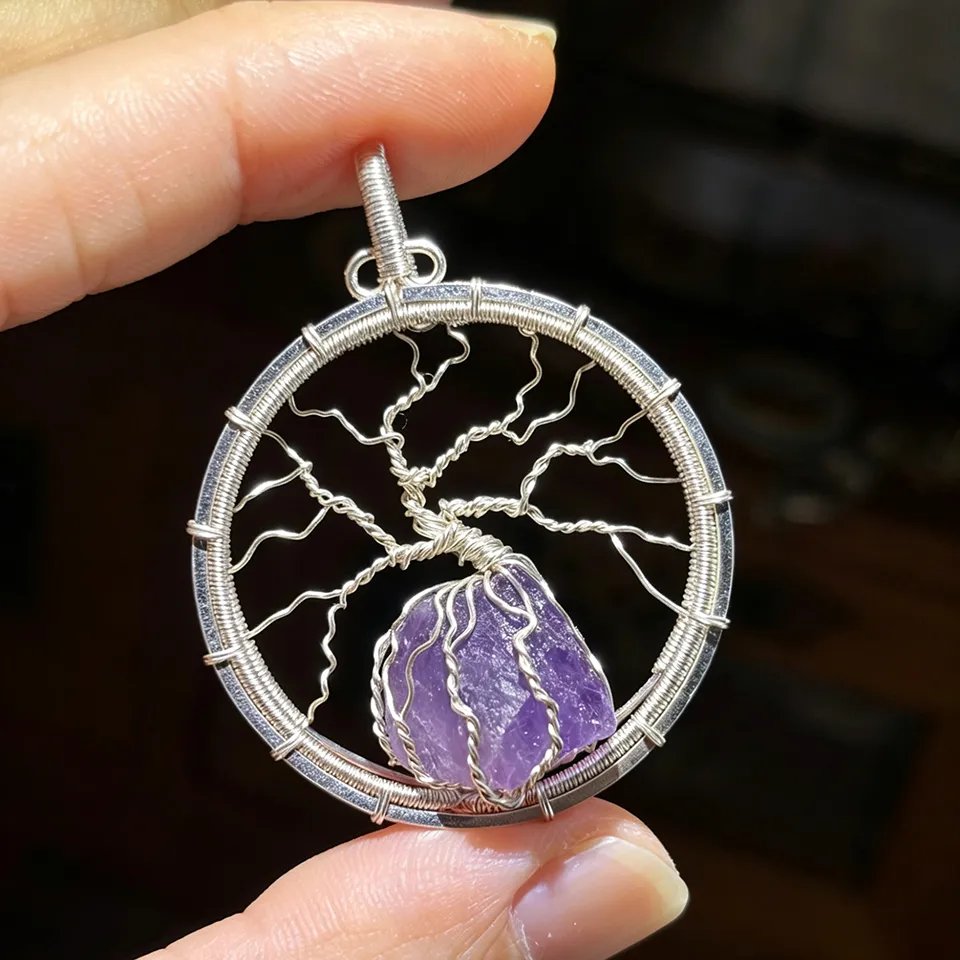
The Amethyst Tree of Life pendant takes a different direction, using a cooler stone and more symbolic linework: https://www.aurelunegems.com/products/amethyst-tree-of-life-wire-wrapped-pendant
The point is not to copy either design. Notice what your eye reads first: color, shape, wire pattern, or the way the pendant sits on the body. That observation can become the starting brief for your own handmade piece, whether you are selecting a finished pendant or planning a custom direction.
07 / Preserve the relationship
Care keeps the design legible
After wearing a wire-wrapped pendant, give it a quick visual check. Wipe away skin oils or residue with a soft, dry cloth, keep it away from harsh chemicals and unnecessary moisture, and store it separately so the stone and wire do not rub against harder jewelry. Avoid pulling the bail or branches when you pick it up.
Care is also a chance to notice change. Natural stones vary in pattern and surface, and handmade wirework carries small signs of the hand that made it. If a gemstone comes with specific care instructions, those instructions take priority over a general routine.
Crystal focal stones and wire-wrapped pendant design
Choose a crystal focal stone by balancing silhouette, color, traditional gemstone symbolism, comfort, and the amount of wirework needed to support it. The strongest handmade pendant designs give the stone room to remain visible while making the setting feel intentional.
AURELUNE Studio
Ready to personalize the fit?
Open the DIY builder to choose stones, preview spacing, and save a bracelet around your wrist size.